Introductions, Forewords and Afterwords
Page two
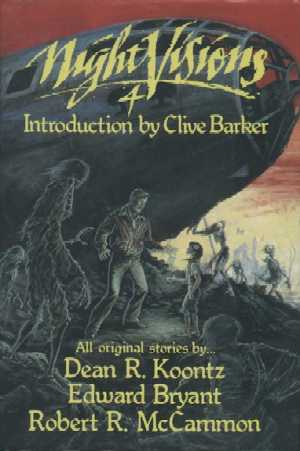
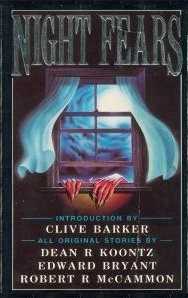
[Re. Horror genre] "One should probably not be surprised that this area of fictional endeavour is often treated with contempt. The function these stories serve is too raw. it requires an admission of vulnerability in the experience; a willingness to confess to nightmares, in a culture that increasingly parades banality as feeling, and indifference as proof of sophistication."
Night Visions 4
introduction by Barker. (i) Night Visions 4, Dark Harvest 1987 (ii) Night Fears, Headline 1989 (iii) Clive Barker's Shadows in Eden
"I was, at the beginning of my career, a passionate believer in the need to convince people to re-evaluate horror, particularly in the literary form. After all, I argued, the best of science-fiction novels and spy thrillers are now viewed as literature, why should the same respect not be paid to a fictional form that uses supernatural conceits to debate and illuminate the dark side of our personal planets? Much of the work in the genre is, of course, sheer sensationalism, but then there are a thousand disposable hackworks for every book by John Le Carre or Frank Herbert. Shouldn't we judge a genre by its finest members not by its runts? That was the core of my position. But over the years i've largely given up on the debate. People will come to the point-of-view in their own time or not at all."
A - Z of Horror
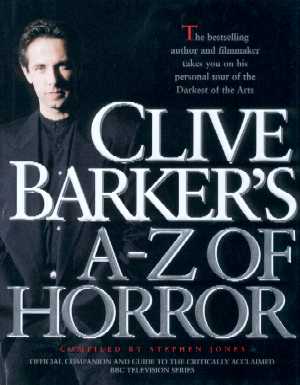
Clive Barker's A - Z of Horror, compiled by Stephen Jones, (see Related Books) introduction by Barker, 1996.
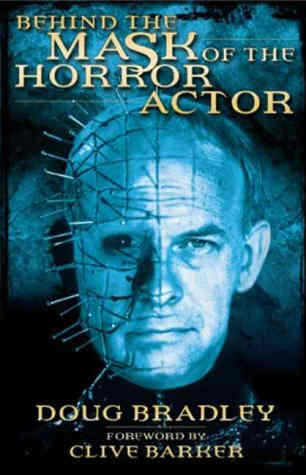
 "The mask is, of course, both a means of concealment and one of
confession. it covers the human and reveals the inhuman. The
man disappears, and a creature of mythic proportions replaces him:
some demon or divinity, a terrible intelligence. There has to be
part of the actor that both enjoys and understands the nature of such
creatures in order to intimidate us with their presence. When that
comprehension is missing, the mask just sits there, curiously blank.
it follows then, that Doug - who is in person a gentleman after the
old school, softly spoken and slyly self-deprecating - must have in him
somewhere an understanding of the great beast he portays in the
Hellraiser films. Doug is Pinhead, after all. The latex and
the costume and the rhetoric aren't worth a damn without him. The
arrogance and the sadistic glee (it gleams there in the monster's eyes,
despite his apparent dispassion), is Doug's gift to the creation, just
as surely as the measure of his step or the angle of his head. Without
them, the creature would be diminished to the sum of its nails."
"The mask is, of course, both a means of concealment and one of
confession. it covers the human and reveals the inhuman. The
man disappears, and a creature of mythic proportions replaces him:
some demon or divinity, a terrible intelligence. There has to be
part of the actor that both enjoys and understands the nature of such
creatures in order to intimidate us with their presence. When that
comprehension is missing, the mask just sits there, curiously blank.
it follows then, that Doug - who is in person a gentleman after the
old school, softly spoken and slyly self-deprecating - must have in him
somewhere an understanding of the great beast he portays in the
Hellraiser films. Doug is Pinhead, after all. The latex and
the costume and the rhetoric aren't worth a damn without him. The
arrogance and the sadistic glee (it gleams there in the monster's eyes,
despite his apparent dispassion), is Doug's gift to the creation, just
as surely as the measure of his step or the angle of his head. Without
them, the creature would be diminished to the sum of its nails."
Sacred Monsters: Behind The Mask Of The Horror Actor
By Doug Bradley, foreword by Barker, August 1996.
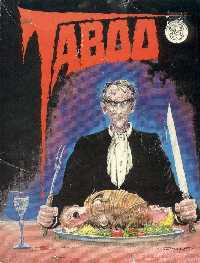 "Two steps beyond the perimeters of Good Taste is
where the best journies begin, never mind end."
"Two steps beyond the perimeters of Good Taste is
where the best journies begin, never mind end."
Taboo
introduction by Barker. (i) Taboo No.1, 1988 (ii) Clive Barker's Shadows in Eden.
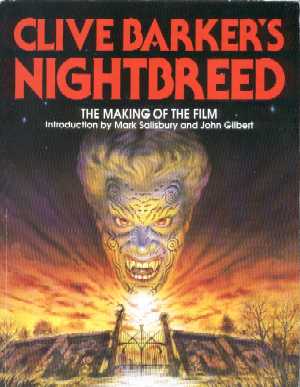
"A movie is a two hour experience, but if an image or a character touches some nerve in the audience, its effect may last a good deal longer. Some sixty years after they were made King Kong and Bride of Frankenstein - two of my favourite dark fantasy films, both focussed as much on their fantastical stars as on the human - exercise considerable fascination for audiences. Karloff and Kong are recognisable images the world over, despite the fact that the films in which they appeared are technically far inferior to those of today. it would be overweening of me to claim (or even hope) that our Breed will join that elevated league of icons, but I'd like to think we're producing images that will at least remain in the audience's head longer than a few hours."
Introduction : Nightbreed
Introduction by Barker. (i) Clive Barker's Nightbreed - The Making of the Film, 1990 (see Related Books) (ii) Clive Barker's Shadows in Eden.(see Related Books)
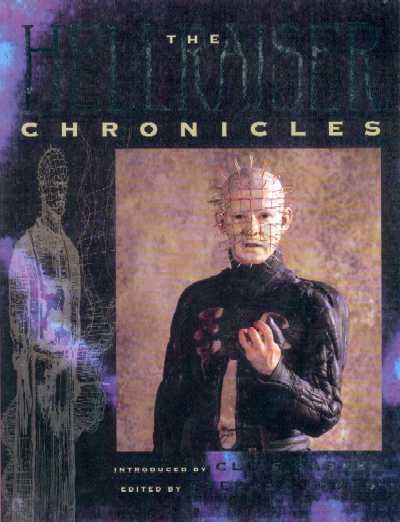 "The inside of my skull is more like a wall upon which decades of
posters have been plastered - for circuses, for trials, for vaudevilles
and public exorcisms - their images (some garish, some spare) pasted
on top of one another.
"In places, the more recent additions have been torn and gouged away,
revealing glimpses of events that have long since passed from view,
but whose fragments are here patched with more modern entertainments,
creating a sum far weirder than its parts. in others, an image has
gathered echoes, and is now surrounded by bizarre puns and riffs upon
itself.
"It is this collage I gaze upon when I close my eyes, awaiting the
dream that will obsess me next, and - given that nothing is ever
completely original - I assume that the sources of all my characters,
landscapes, stories and mythologies can be found somewhere in its
complexities."
"The inside of my skull is more like a wall upon which decades of
posters have been plastered - for circuses, for trials, for vaudevilles
and public exorcisms - their images (some garish, some spare) pasted
on top of one another.
"In places, the more recent additions have been torn and gouged away,
revealing glimpses of events that have long since passed from view,
but whose fragments are here patched with more modern entertainments,
creating a sum far weirder than its parts. in others, an image has
gathered echoes, and is now surrounded by bizarre puns and riffs upon
itself.
"It is this collage I gaze upon when I close my eyes, awaiting the
dream that will obsess me next, and - given that nothing is ever
completely original - I assume that the sources of all my characters,
landscapes, stories and mythologies can be found somewhere in its
complexities."
Out Of My Skull
Clive Barker's Hellraiser Chronicles, edited by Stephen Jones, (see Related Books) introduction by Barker, February 1992.
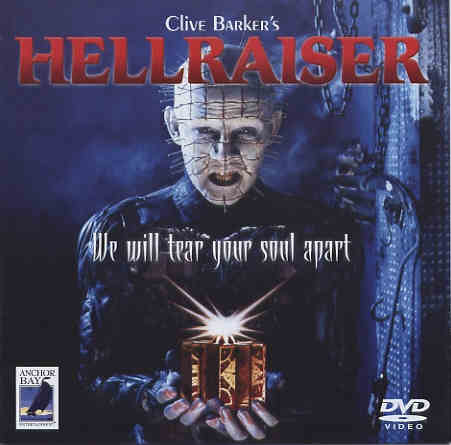 "Nothing springs into my imagination without having inspiration in other things I've seen or experienced. The Cenobites were no
exception. Their design was influenced amongst other things by punk, by Catholicism and by the visits I would take to S & M clubs
in New York and Amsterdam...
"There was another source of inspiration for the Cenobites; more particularly for Pinhead himself. I had seen a book containing
photographs of African fetishes: sculptures of human heads crudely carved from wood and then pierced with dozens, sometimes
hundreds, of nails and spikes. They were images of rage, the text instructed.
"To rage, then; and to the monsters that embody it. They keep us sane, I think. At least a little."
"Nothing springs into my imagination without having inspiration in other things I've seen or experienced. The Cenobites were no
exception. Their design was influenced amongst other things by punk, by Catholicism and by the visits I would take to S & M clubs
in New York and Amsterdam...
"There was another source of inspiration for the Cenobites; more particularly for Pinhead himself. I had seen a book containing
photographs of African fetishes: sculptures of human heads crudely carved from wood and then pierced with dozens, sometimes
hundreds, of nails and spikes. They were images of rage, the text instructed.
"To rage, then; and to the monsters that embody it. They keep us sane, I think. At least a little."
Hellraiser Box Set
Anchor Bay Hellraiser DVD Box Set Liner Notes, introduction by Barker, Los Angeles, July 2004.

"Our lives are scattered
throughout with periods of unbelonging; in childhood, of course,
and adolescence; but in adulthood too, when sudden loss (or gain)
forces us to reassess things we believe immutable. At such times we all
become like changeling children, at odds with our friends and peers,
looking to distant horizons for fresh comprehension of ourselves.
"The fiction of the fantastic brims with metaphors for this condition:
tales of people whose cells are protean and souls migrant, people
called by mysterious forces to a place they've visited in other lives
or states; a place never understood - at least until the moment of
crisis - as their real home. There, perhaps, they may enjoy the company
of their own tribe. Welcome, then, to the people i feel particularly
at home with: the Nightbreed."
The Nightbreed Chronicles
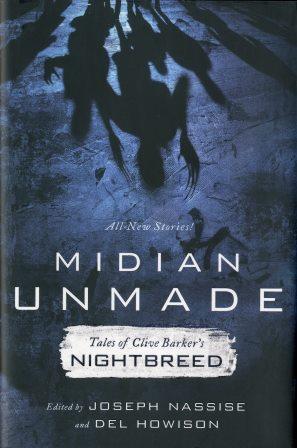
Introduction by Barker (i) Clive Barker's The Nightbreed Chronicles, edited by Stephen Jones, September 1989 (see Related Books) (ii) Midian Unmade, edited by Joseph Nassise, Del Howison, 2015.
"The Decamundi. A series of ten New Worlds where dozens of characters who have never before existed outside my fevered imagination are ready to erupt. The stories and mythologies we are creating for you are, i promise, without precedent in my creative life. There's nothing here you will have seen in one of my movies or read in one of my novels or short stories. The Barkerverse has been created specifically for the comic-book page... "in the upcoming months the Barkerverse is set for a Big Bang, as new characters, titles, and worlds are added to the four that will be in your hands this Summer. if you find too many of the New Universes being touted around by the competition look suspiciously like old Universes with a half-hearted lick of paint, come with us on our journey into the wilds of the Decamundi. We will take you on the ride of your lives. And isn't that why we all go into comic books in the first place, to be transported? "Enough. i've got a dozen continents to name and a star system to create before i'm done for the day. it's a tough job playing God, but somebody's got to do it..."
Razorline
First Cut - Razorline, Vol. 1, No 1, introduction by Barker, September 1993


"There is a kind of academic sleight-of-hand which keeps populist fiction from being a legitimate source of interest until the author is dead, and the bones of the author's intent can be fought over without fear of his or her opinion spoiling the debate. A variation on that trick takes the fright out of Poe, the sex out of Whitman, the Devil out of Melville. in short, it seeks to tame. "But the fantastique, perhaps more than any other genre, defies domestication. it is imagination in action; an account - at its best - of how the mind transforms reality; makes it metaphor, makes it myth; uses it to harrow and heal. The critic who tackles contemporary fantastique is therefore a welcome sight, because the field is a difficult one. A fresh vocabulary has to be forged - the old definitions are laughably stale, as witness several recent essays on the so called weird tale - and a plethora of late twentieth century concerns must be folded into the mix: the influence of cinema upon the reader's expectations; the decay of the Christian belief system which underpins so much of this work; the significance of feminist thinking on fantastique writing; and so on and so forth."
Regarding 'Imagination as Metaphor'
Clive Barker's Short Stories : Imagination as Metaphor... , edited by Gary Hoppenstand, (see Related Books) foreword by Barker, Spring 1994.
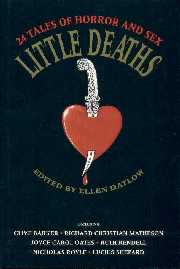
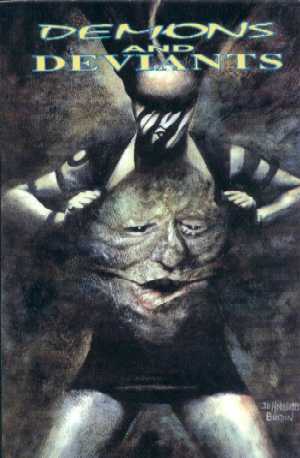
"The short tale which follows is not - let me be plain - that promised sequel [to Great and Secret Show]. But it does mark my first tentative investigation of the other territories that look on to Quiddity. One of those continents is occupied by the Iad Ouroboros, who are briefly glimpsed in the closing chapters of Show, and seem to pose a considerable threat to our species. But theirs is just one of many civilisations that, like ours, stand on the shores of Quiddity. The fragment that follows is set in another of those realms, and concerns itself with two wanderers who encounter the powers of the dream-sea."
On Amen's Shore
By Clive Barker (see Short Stories) foreword by Barker, Los Angeles, 1992.
"It's such a simple idea, but it still seems to me miraculous: that in words we may preserve ideas and images precious to us. Not only preserve them, but pass them on. To dream in isolation can be properly splendid to be sure; but to dream in company seems to me infinitely preferable."
Weaveworld
By Clive Barker (see Novels) foreword by Barker to the 10th anniversary edition, 1996 [published 1997], also reprinted in 1999 UK edition.
"The deeper I got into writing Imajica, the more certain I became that completing it was beyond me. i have never come closer to giving up as I came on this book, never doubted more deeply my skills as a storyteller, was never more lost, never more afraid. But nor was I ever more obsessed. I became so thoroughly immersed in the narrative that for a period of several weeks toward the end of the final draft a kind of benign insanity settled upon me."
Imajica
By Clive Barker (see Novels) foreword by Barker to the novel split into two volumes, 1994 [published 1995].
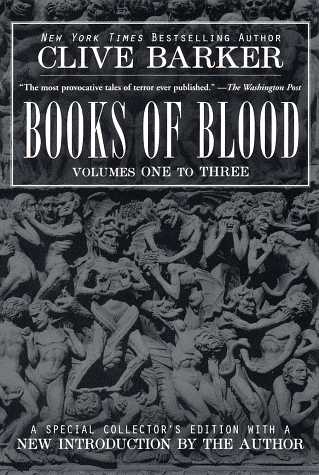
"A short-story is like a time-capsule. it records - in a fashion that cannot be easily understood until some considerable time has passed - very specific details of how the author's life was being lived when the words were set down... "I look at these pieces and I don't think the man who wrote them is alive in me anymore...We are our own graveyards; we squat amongst the tombs of the people we were."
The Books of Blood
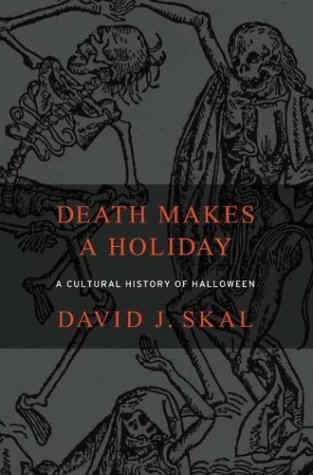
By Clive Barker (see Short Stories) (i) foreword by Barker to the collected Volumes 1 to 3, May 1998 (ii) quoted as 'Amalgam Of Sexual Excess' in Death Makes A Holiday by David J. Skal, 2002.
"Jim has a posture for which I've become a useful foil: that of the
plain man who'll have no truck with talk of subtext, metaphor or
allegorical intent. Whenever such words stray on to my lips (and,
mea culpa, they often do) he takes great delight in refuting my
high-flown claims with jocular but well-argued replies, stating clearly
that he believes all such analyses are poppycock...
"Now, please don't get me wrong. I don't doubt that Jim's phenomenal
commercial success is based upon his instincts as a storyteller, and
his undoubted skill at orchestrating his scenes to generate the
maximum frisson. But the fiction of the fantastique is
seldom successful simply because it tells a chilling tale. At some
point in the narrative, something other than the pulse is quickened,
and something more than the urge to be thrilled satisfied."
James Herbert: Afterword
Afterword by Barker, 1992, James Herbert: By Horror Haunted, Edited by Stephen Jones.
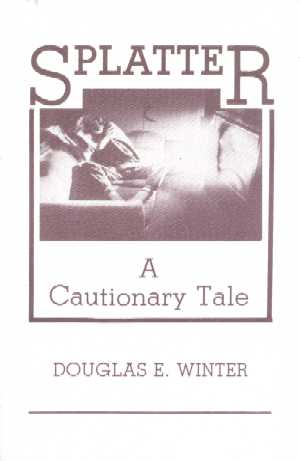
"There are those we have set above us as wiser apes; as arbiters, as blindfold merchants. They are grown men and women, but no more grown than you or me, and certainly no more possessed of absolute intelligence on the nature of good or evil. Asked where the root of malice in mankind lay, they'd be no more able to tell us than any other person, though they'd probably throw us a smoke screen of bad theology and psychobabble to conceal their ignorance. Nevertheless, these people have the power to cover our eyes. To say, as our parents did: you will not look. "That we lend them the power to do so remains a mystery to me. in electing them to blind our tribe, are we protecting the weaker members from sights that may drive them to crime, as it's argued, or are we admitting that we don't want the responsibility as individuals of choosing what we can personally interpret and profit by; that we want, in a sense, always to be told when to see or when to look away?"
To See or Not to See: An introduction
introduction by Barker (i) Splatter: A Cautionary Tale by Douglas E. Winter, 1987 (ii) Clive Barker's Shadows in Eden.
"The Great And Secret Show is about these possibilities... About our images of evil and good; about forbidden passion; about the nightmares of Armageddon which visit us all, at one time or another. These are, I believe, the subjects that fantasy and horror and science fiction are uniquely placed to address. They are fictions that can stray into the no-man's land between dreaming and waking where we do the dark business of our secret selves. My appetite for these stories knows no bounds."
Realms of Fantastic Fiction
introduction by Barker to W.H.Smith leaflet, 1989.
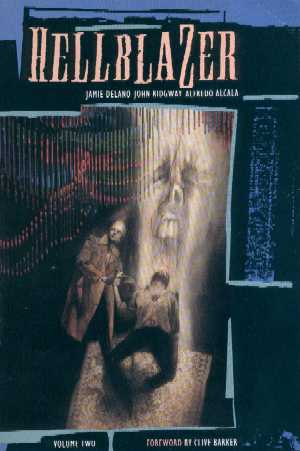
"These are stories that touch upon the issues of the day : AiDS, nuclear waste, the rise of neo-Nazism, street violence. A grim picture. But then, horror fiction should be grim, or else it simply becomes a wallowing in Grand Guignol. Hellblazer contains enough of that to keep any splatterpunk happy - and a good deal more besides. Tough stuff, but you'll have plenty to chew on."
Hellblazer Volume II
by J.Delano, J.Ridgway, A.Alcala, foreword by Barker, May 1989.
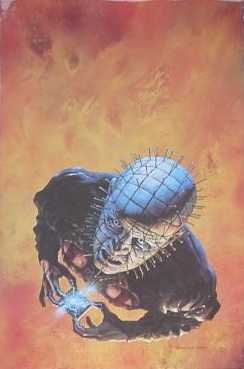
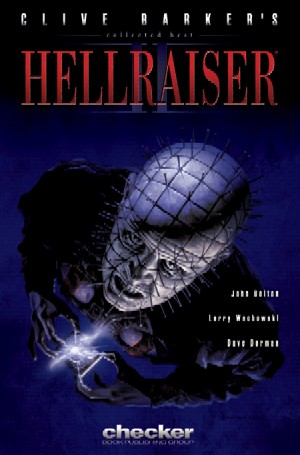
"The extraordinary event is this: that the moment you make a story or create an image that finds favour with an audience, you've effectively lost it. it toddles off, the little bastard; it becomes the property of the fans. it's they who create around it their own mythologies; who make sequels and prequels in their imagination; who point out the inconsistencies in your plotting. I can envisage no greater compliment. What more could a writer or filmmaker ever ask, than that their fiction be embraced and become part of the dream-lives of people who it's likely he'll never even meet? "Hellraiser, and to a lesser extent the novella upon which it's based, The Hellbound Heart, were pieces of work that elicited these welcome responses from their first appearance on page and screen. That the Lament Configuration and the Cenobites its solving summons - especially, of course - be taken to the hearts and imaginations of so many healthily perverse folks around the world was both surprising and reassuring to me."
Hellraiser, Book 1
introduction by Barker December 1989 (i) Hellraiser graphic novel, Book 1, 1989 (ii) Hellraiser Volume One, 1990 (iii) Clive Barker's Collected Best Hellraiser Volume 2, 2003 (iv) Clive Barker's Collected Best Hellraiser Volume 3, 2004.
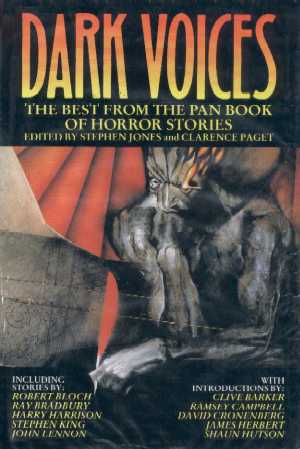
"The Pan Book of Horror Stories were, as far as I can remember,
the first collections I bought that contained works by several hands,

 and I shamelessly stole and embroidered the tales for retelling around
scout camp-fires and on school treks. it was one of the few things I
was actually good at as a kid; and I don't doubt that those retellings
were the first experiences I had of the power the teller of horror
stories feels as he holds his audience in a grip from which they might
wish to wriggle but can't...
and I shamelessly stole and embroidered the tales for retelling around
scout camp-fires and on school treks. it was one of the few things I
was actually good at as a kid; and I don't doubt that those retellings
were the first experiences I had of the power the teller of horror
stories feels as he holds his audience in a grip from which they might
wish to wriggle but can't...
"I don't think I ever shaped The Speciality of the House for such a
telling; it was too oblique for my oral style to translate. But it
certainly made an impression on me. Here was - is - a highly
distressing idea told with a wilful elegance that feeds the distress
rather than draining it. The lesson? That you can say just about
anything as long as you say it with sufficient style.
"The things you learn from books... "
Dark Voices: The Best From the Pan Book of Horror Stories
Edited Stephen Jones, Clarence Paget, introduction by Barker to 'The Specialty of the House', 1990.
[Re. West End production at the Aldwych from 15th October, 1986] "All the subtext went to the wall, unfortunately, and with it the reality that might have made metaphor of the nonsense. What remained were the nonsenses, with which critics have problems, as they are by definition not susceptible to analysis. (The nonsenses, that is. i'm certain a good number of critics would benefit from analysis.)"
Footnote to Cartoons
comment by Barker on The Secret Life of Cartoons, in Clive Barker's Shadows in Eden, 1991.
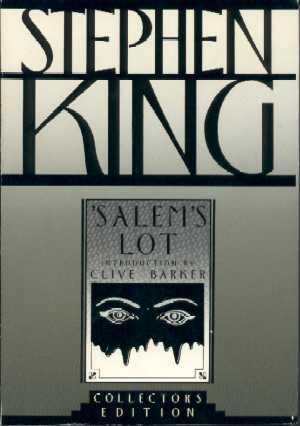
"The skill at evoking the physical and psychological geography of a small community has of course become one of Mr. King's trademarks, and he is seldom more pithy, insightful, or humane than here. The foibles and peccadillos of the townspeople are not only laid before us in entertaining detail but are intricately linked to the town's subjugation and ultimate demise. The grand evil that comes to 'Salem's Lot uncovers a host of smaller evils - the common domestic crime that every community willfully conceals - and is empowered by them. it is not, finally, the vampires that kill 'Salems Lot, but rather a corruption in the town itself, or more correctly, in its people; a number of little sins that allow the greater villainy its hold upon the town's soul. Perhaps it's this, more than any other element, which so distinguishes the book for me: the sense that 'Salem's Lot is complicit, by dint of its apathy and its obtuseness, in its own destruction. The novel, after all, is not named after the vampire, but after the meat on which the vampire feasts. it is the victim's tale and it is, in essence, a four-hundred-page suicide note."
Introduction
Introduction by Barker to 'Salem's Lot, by Stephen King, Collector's Edition, Plume, 1991.
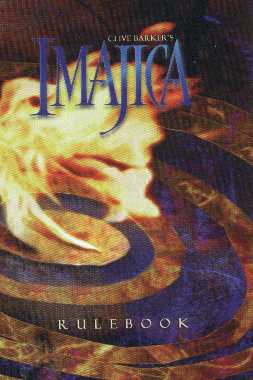
"In your hands is the beginning of a new Imajica journey; a game very different from that which I played in writing the novel. In fact, it is in one sense a glorious undoing of my labors. For here the words have been returned to images and ideas, and the roads which I chose not to take in the book are once more available for the traveling."
Author's Introduction
Introduction by Barker to the Imajica card game rulebook, 1997
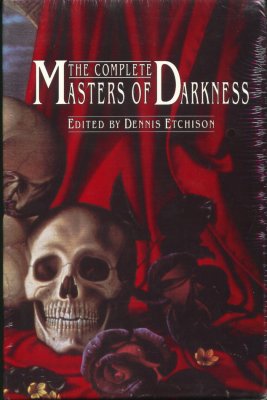
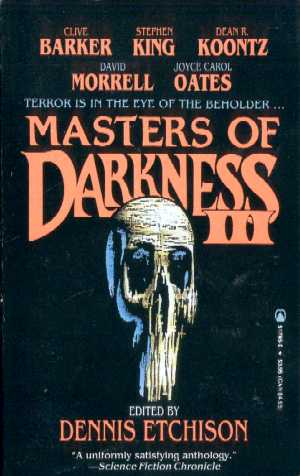
"Before it was published, 'in The Hills, The Cities' had the dubious
distinction of being the most scorned of those stories contained in
The Books Of Blood. Nobody liked it... The repeated objection was that
the conceit of the story was so far beyond the parameters of the
believable that no reader would embrace it...
"They were wrong. The readers of popular horror fiction will devour
the most outlandish ideas if publishers will only give them a chance
to demonstrate their appetite.
"I'm proud of the story, but in a way I'm even more proud of the
readership that proved the cynics wrong; the readership which will
take horror fiction kicking and screaming into the 21st Century because
it wants to stretch its imagination beyond the limits..."
Author's Note
Afterword by Barker to in The Hills, The Cities, as published in Masters of Darkness iii and The Complete Masters Of Darkness, edited by Dennis Etchison, 1991.
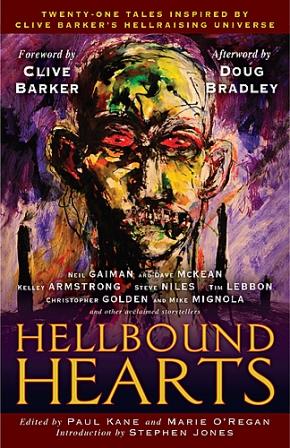
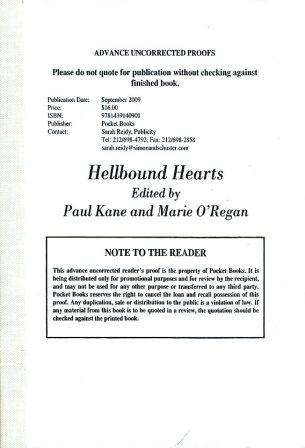
"Perhaps it isn't so monstrously arrogant to speak of the mythos [of Hellraiser]. I am not its maker. If it survives for another hundred years or is forgotten tomorrow, I have no say in the matter. Hellraiser - its stories and images, its metaphysics and its sheer visceral energy - is the work of other hands and other minds."
Hellbound Hearts
Foreword by Barker to Hellbound Hearts, edited by Paul Kane and Marie O'Regan, 2009.


