Interviews 1993 (Part Two)
Clive Barker : Spokesman For The Strange
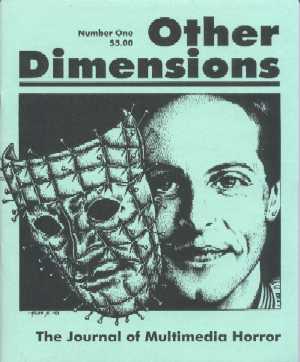
By Stephen Haff, Other Dimensions, No 1, Summer 1993
"Great religion is great theatre. Going to a service in Chartres cathedral is great
theatre. To visit the Vatican is to see stage sets with a text that is now regrettably so
 stale nobody understands it any longer. But it is great theatre. Magic is religion by
another name. It is a celebration, in my books, of something that is both very intimate
in the individual and very universal. By which I mean that the forms of magic, while they
carry, as you say, their laws and rules, the forms are very responsive to the will of
the individual. You repeat the Lord's Prayer or two hundred Hail Marys, and you're one
of zillions of other people doing exactly the same thing. In the magical model, the
personal, intimate life of the magician is intrinsic to the doing of the magic. In that
sense it's much more like a piece of theatre, much more like a piece of improvised theatre,
a piece of pagan theatre, than a performance of Racine, which is, hear the meter, here's
what we've got to do. It's much more like an extemporised performance by twelve crazy
people. We see so little magic on stage. Whether it be in avant-garde or mainstream
theatre. There's so little sense of the magical."
stale nobody understands it any longer. But it is great theatre. Magic is religion by
another name. It is a celebration, in my books, of something that is both very intimate
in the individual and very universal. By which I mean that the forms of magic, while they
carry, as you say, their laws and rules, the forms are very responsive to the will of
the individual. You repeat the Lord's Prayer or two hundred Hail Marys, and you're one
of zillions of other people doing exactly the same thing. In the magical model, the
personal, intimate life of the magician is intrinsic to the doing of the magic. In that
sense it's much more like a piece of theatre, much more like a piece of improvised theatre,
a piece of pagan theatre, than a performance of Racine, which is, hear the meter, here's
what we've got to do. It's much more like an extemporised performance by twelve crazy
people. We see so little magic on stage. Whether it be in avant-garde or mainstream
theatre. There's so little sense of the magical."
Ghoul School
By Mark Kermode, Sight And Sound, Vol 3 No 6, June 1993
"The dreamscapes of Max Ernst or Dali, which are full of strange
 mutations of flesh, put on canvas what David Cronenberg put on screen.
The only difference is that Ernst and Dali did it 50 years earlier.
Images we now associate with horror films - bodies melting, oozing,
opening out - have been in the painterly tradition for many years. You
could go back to Bosch to see the body reconfigured in that way. What
Cronenberg did brilliantly was to acknowledge that these were about
psychic conditions and to find narratives to express them. There's
more of a continuum between painting and the work of special effects
artist Rick Baker, who worked on The Exorcist and The Howling, than
between Baker and what happened in movies of the 40's and 50's. I feel
that 'weird' often segues into horror without there being much of a gap."
mutations of flesh, put on canvas what David Cronenberg put on screen.
The only difference is that Ernst and Dali did it 50 years earlier.
Images we now associate with horror films - bodies melting, oozing,
opening out - have been in the painterly tradition for many years. You
could go back to Bosch to see the body reconfigured in that way. What
Cronenberg did brilliantly was to acknowledge that these were about
psychic conditions and to find narratives to express them. There's
more of a continuum between painting and the work of special effects
artist Rick Baker, who worked on The Exorcist and The Howling, than
between Baker and what happened in movies of the 40's and 50's. I feel
that 'weird' often segues into horror without there being much of a gap."
Sixth Annual Capital City Sales Conference
Platform presentation in New York in May 1993,
reported by James Eisele in Marvel's in-house magazine, Internal Correspondence, June 1993, as 'Guest Speaker Clive Barker'
"Good evening ladies and gentlemen. My name is Clive Barker. I may have induced some nightmares in some of you, and those I haven't reached yet I intend to reach before the evening is out!
"May I extend my thanks to Capital and to Marvel for giving me a podium from which to speak of something here which is very close to my twisted heart. You know me perhaps as the creator of Pinhead and more recently of Candyman. Maybe you know me from my books, which are increasingly fantasy books, in fact.
"I come here, however, to share a private vice - I love superheroes. And have always loved superheroes. They were perhaps the first imaginative journey that I ever took. I was trapped in a limo with Mr. [Stan] Lee about a week ago, and I was singing his praises and saying how much his imagination had affected mine. It absolutely did, his and Jack [Kirby]'s, changed the way that I looked at the imagination. I want to be able to share some of that enthusiasm with you in a new line of comic books called Razorline.
"The thing I want to say about these four titles is that they all occupy the same world, they all occupy the Barkerverse. They are the beginning of an expanding universe of worlds which will contain superheroes, wonderful monsters, and extraordinary landscapes. This is a marriage of minds; it's called the Barkerverse but they are very much Marvel comics. These are comics that are going to be there for your eight-year-old customers. You're not going to have to take them off the shelves the way you might have done when a five-year-old came in and tried to pick up Hellraiser. These are mainstream comics reflecting a passion that I have for mainstream comics."
'Hellraiser' Barker: Horror Writer Pins Down New Ideas
By Frank Lovece, Newspaper Enterprise Association, 29 June 1993
"I haven't actually written horror for a very long time, not a horror novel or short story in eight years. Horror is still a part of my movie life, and I thoroughly enjoy that, but it's not a part of my literary life at all. Not because I feel that it's a genre that's beneath me, or that I've moved on or any of that. But I feel as though I've done it and I want to go do something different - not better, just different...
"As an executive producer, I'm doing what I can guard the name, protect the mythology from being diluted. I don't always succeed but that's what I'm there for - to remind people to continue to take this stuff seriously."
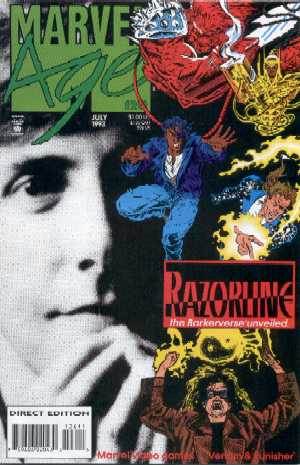
Razorline
 By Tom Russo,
Marvel Age, Vol 1 No 126, July 1993
By Tom Russo,
Marvel Age, Vol 1 No 126, July 1993
"I wanted to do a super hero comic, something which would be my take on what super heroes were going to be like in the '90s... Hyperkind fell into that category. I wanted to do something that was magical and mystical in the way that Doctor Strange was and still is. Doctor Strange was one of my favourite comics from when I was a kid. So I suppose Hokum & Hex is my take on that. Ectokid, which is perhaps the second weirdest of the bunch, is a kind of dream story for the 15-year-old that's still alive to me - the tale of an adolescent who lives in two worlds and has access to a whole other sphere of reality. And Saint Sinner is just a wild one, the series which hopefully will press the limits of what comics can do."
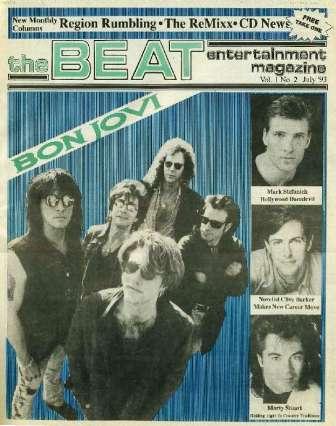
Marvel Comics Pulls Super Heroes from The Mind Of Clive Barker
 By Wendy LaBisoniere,
The Beat, Vol 1 No 2, July 1993
By Wendy LaBisoniere,
The Beat, Vol 1 No 2, July 1993
"The material here is a different kind of comic, a different kind of superhero. These aren't guys who get out bigger muscles and bigger guns and just beat the bejesus out of one another. The mythologies that lie behind these are more complex and more carefully thought out... which may be a little more interesting...
"I had provided a complete 'bible' to each of these comics. Then the various writers went away and fantasticated and made more complex; in fact made more personal to them the concerns with these titles. So we ended up with something which was soft in my imagination, but expanded upon very considerably by both the writers and artists - expanded to make something which is as much of their expression as it is of mine."
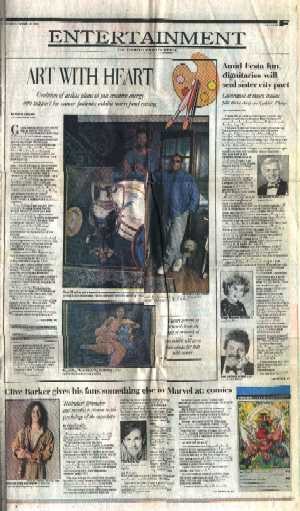
Clive Barker Gives His Fans Something Else To Marvel At: Comics
By John Douglas, Grand Rapids Press: Entertainment, 8 August 1993
"I think it does reflect something about our modern preoccupation with the ambiguity of evil and the ambiguity of good that we no longer believe in someone being so pure of heart and intentions that they can carry themselves for God, country and the American way without having some little corner of their soul positively dark, cobwebbed and gothic. When you go back to classical heroes, these are all characters who have secrets which finally destroy them. No matter how heroic they seem on the outside they are dealing with guilt, dealing with shame, dealing with secrets and it may well be that the Norman Rockwell age of heroes who did good for good's sake is artificial fare."
Cutting The Razorline
By Frank Kurtz, Hero Illustrated, No 2, August 1993
"I watch over all of this stuff. I see all of the artwork. Malcolm Smith, my consulting editor on the Razorline and one of the writers on The Harrowers, is there to be my eye when I'm not around. Between the two of us, we're watching over this stuff very closely. Not to catch anybody out, but to help if there are problems, to illuminate some of the darker parts of the mythology so that people know what we're trying to achieve here. Stories are written for purposes. Stories should leave you with a new piece of information in your head. You have to say to the writers, 'Look, have all the fun in the world, but remember that at the end of the day, there should be a reason for telling the story.' People should feel, in the best of worlds, a little bit changed by a story. Something that is alive in their hearts that wasn't there when they opened up the comic book."
Gods By Other Names
By Bill Warren, Comics Scene, No 36, August 1993
"Euripides set on the stage tales of men and divinities mingling. What we have in the late 20th
Century is the Fantastic Four - and my tongue isn't in my cheek when I say that...
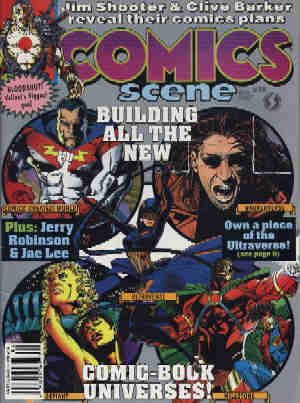 "These brightly coloured creatures, who descend from the stars with powers that are
superhuman in order to save us from our own worst instincts and those who would destroy us,
are gods by other names.
"These brightly coloured creatures, who descend from the stars with powers that are
superhuman in order to save us from our own worst instincts and those who would destroy us,
are gods by other names.
"I believe comics, by and large, are telling the folkloric tales, the religious tales which have fallen from
grace in other forms. We still need those miraculous tales, we still need to know that there's a hand
there to save us if we fail. And it will not be a human hand. I think we need the comfort of these
stories just as we need the ghost story and the urban legend. We need a sense of the divine, we
need (as in the title of a wonderful book by Peter Berger) a rumour of angels. We need to know that
something miraculous is around the corner. And even if we don't believe this is actually happening in our
world, we can gather for a while around a campfire and hear ghost tales, or we can sit around and read of heroes."
Birth Of A Barkerverse
By Michael Berry, Wizard, No 25, September 1993
[Re Razorline characters] "Everybody has a history. Everybody has reasons. There's a kind
of richness in the mythologies that lie behind the villains and the superheroes too. We
don't have your basic motivations of, 'I want to dominate the world because it happens to
be convenient for this storyline.' We've got guys with long, interstellar histories. They
have religious reasons, political reasons.
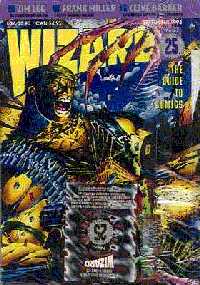 "Rather than just provide villains who are foils for our heroes and then dispatched at
the end of each story arc, only to rise again after four issues, we're trying to create
a kind of narrative texture for these characters. What you'll see is all the classical
things you epect from a villain, those damnable deeds and terrible technologies, but also
a richness of characterisation and motive which will make them more interesting than your
average crazy guy who likes ranting about how he's going to take over the world...
"Rather than just provide villains who are foils for our heroes and then dispatched at
the end of each story arc, only to rise again after four issues, we're trying to create
a kind of narrative texture for these characters. What you'll see is all the classical
things you epect from a villain, those damnable deeds and terrible technologies, but also
a richness of characterisation and motive which will make them more interesting than your
average crazy guy who likes ranting about how he's going to take over the world...
"My first career was as a painter, and then I turned to writing. From writing I turned to
filmmaking. And now I do all three. In a sense, comics stand at an intersection of those
things. They're very visual. They depend on good storytelling. They allow you what can
be loosely called cinematic effects.
"I've gotten used to, and come to enjoy the process of collaboration... You have to be
willing and able to fold your ideas into the mix and encourage people. If the ceators
are having a good time and producing good, original material, I let them go their own way. If they're having problems, I'm there to step in and help solve them. I'm not about to take my ball home if someone doesn't do things quite the way I've anticipated. Part of the pleasure of life is to be in business with other imaginations. It's not to my advantage to stultify other people's creative urges."
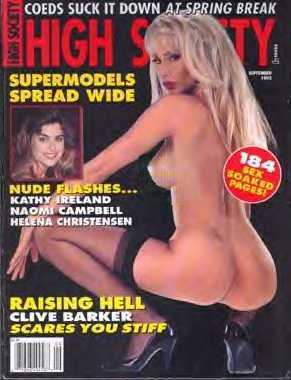
Raising Hell With Clive Barker
By Daniel Markham, High Society, Vol 18 No 9, September 1993
"Pleasure, hopefully, is imparted on the surface. It's the business of the writing. It's the richness of the metaphor. It's the cadence of the sentences... it's much more complex on the literary level [than the cinematic], and much more interesting on the literary level because when something terrible happens, that's when my language gets really lush."
Yesterday, Today And Tomorrow
By Michael Brown, Dread, No 11, September 1993
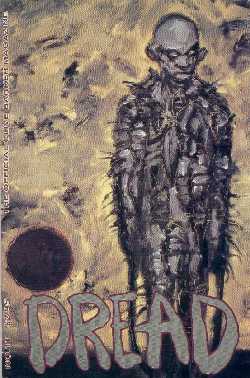 "One of the weird things about going back to The Great and Secret Show
and reading through it again is how, unconsciously, I seem to have left
lots of hooks for myself - some of which I can't talk about because it
would really give away what I am doing next in the next book. The
very obvious one is that the Iad are coming. But there are also all
kinds of linguistic things that I did. Things that were dropped into
the choice of names or words which seem to suggest that somewhere in
my subconscious I knew what the whole arc of the story was going to be.
I left The Great and Secret Show somewhat disappointed in the sense
that I wanted to tell the story more fully but I wasn't going to be
able to finish the narrative within the span of the book. It was like
coitus interruptus. I was also very tired when I finished writing it.
I had finished Nightbreed and then gone on the road for Nightbreed and
for Show. I did those tours back to back and I was completely wiped
out when I finished that. I had all the fallout of the bad feelings
about Nightbreed... I left Show not really sure of what I had done.
Never having the focus on it really. I went back to it realising it
was actually pretty cool. A lot of people are going to be surprised at
who survives from the first book, who you think is dead, and a few
people are going to be surprised at who dies in the second, which is
going to lead to a massive conclusion in the third book. The whole
thing is a very interesting challenge."
"One of the weird things about going back to The Great and Secret Show
and reading through it again is how, unconsciously, I seem to have left
lots of hooks for myself - some of which I can't talk about because it
would really give away what I am doing next in the next book. The
very obvious one is that the Iad are coming. But there are also all
kinds of linguistic things that I did. Things that were dropped into
the choice of names or words which seem to suggest that somewhere in
my subconscious I knew what the whole arc of the story was going to be.
I left The Great and Secret Show somewhat disappointed in the sense
that I wanted to tell the story more fully but I wasn't going to be
able to finish the narrative within the span of the book. It was like
coitus interruptus. I was also very tired when I finished writing it.
I had finished Nightbreed and then gone on the road for Nightbreed and
for Show. I did those tours back to back and I was completely wiped
out when I finished that. I had all the fallout of the bad feelings
about Nightbreed... I left Show not really sure of what I had done.
Never having the focus on it really. I went back to it realising it
was actually pretty cool. A lot of people are going to be surprised at
who survives from the first book, who you think is dead, and a few
people are going to be surprised at who dies in the second, which is
going to lead to a massive conclusion in the third book. The whole
thing is a very interesting challenge."
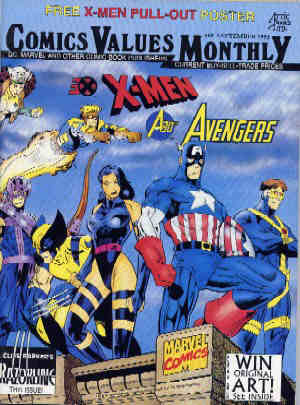
Talking Comics With Clive Barker
By Steve Thomas, Comics Values Monthly, No 85, September 1993
"An idea that I think has a kind of wit is Ectokid. Through your left eye you see one world and through your right eye you see another world. Several times
through the issues - and I think it's really great, it's good drama what they're doing - Dex takes off his patch and on the top frame will be the world he's seeing
through his right eye, the normal world, the mundane world and then the patch gets shifted and the frame below is the world... probably as it really is. The
ultimate world being the world which is fuller rather than emptier, and that has got a rather fun quality to it. You can immediately
see how the thing is going to play out. More fun than just another big guns story, there's something going on there.
"It's not just a question of finding a superhero title, of doing a parody of another superhero title and giving them bigger muscles, a better gun and printing it on
better paper. I'm trying to put the kinds of things in there that excited me when I first came to the medium and they were ideas that excited me, not
shootouts."

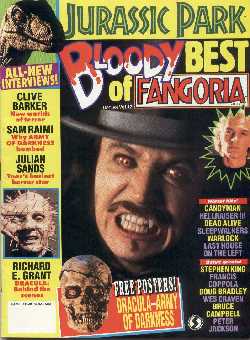
Barker Looks Back
By Anthony C Ferrante, (i) Bloody Best of Fangoria, No 12, September 1993 (ii) Fangoria : Masters of the Dark (slightly updated as " Clive Barker's Horror Hat Trick ") (iii) short portion about writing for children excerpted in Zillo, No 11/04, November 2004
"They [the MPAA] were refusing to allow us to put Pinhead on the poster [for 'Hellraiser III]. We could do it if we took the needles out - I guess if he looks like Mr Clean, it's fine. They said they got a lot of flak for the first two pictures, so they're certainly more sensitive. They decided it was too upsetting to children - but if you go into any comic-book store, you can pick up a comic with his mug on it. Miramax ultimately decided to rock the boat and do it anyway, because it was an illegal act, I suppose, by the MPAA."
Barker's Superheroes
By Bruce Westbrook, Houston Chronicle, 24 October 1993
"Movies are extremely lucrative, and novels don't do badly for me, I'm doing comics more for the fun of it. Comics allow my imagination to take a different kind of journey. I feel I was put on the planet to imagine, and I'll imagine in as many forms as I can, including comics... but there's a danger in seeing comics as second-rate movies. There are things comics can do that movies can't. A cosmic-scale event can be achieved in a comic that can't be achieved in a movie, even with a big budget. And I enjoy hugely the scale of emotions in a comic. I love villains who are about as villainous as the universe will allow. Compared to movies, you can take risks. You can have titles selling 30,000 copies that will still break even. Imagine a movie that only finds an audience of 30,000.''
Writers Of Wonder: Clive Barker
By Mark Dawidziak, Not Of This Earth, Vol 1 No 1, October 1993
"Horror is treated as a respectable literary form in France, Spain and
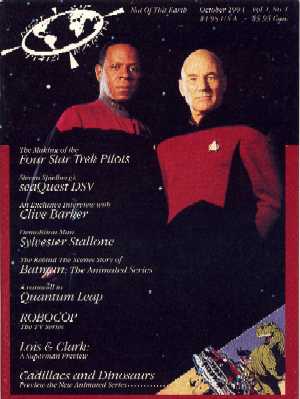 Italy. The French have always been very good with popular culture.
They are credited with triumph after triumph of pointing out to other
countries that their popular writers were great artists. It took
Baudelaire to point out that Poe was a genius. Americans are
suspicious of popular culture, as if it's not important. That's
nonsense. You can't ignore popular culture. Critics have a way of
dismissing popular culture as trivial. Good or bad, you can't ignore it.
Italy. The French have always been very good with popular culture.
They are credited with triumph after triumph of pointing out to other
countries that their popular writers were great artists. It took
Baudelaire to point out that Poe was a genius. Americans are
suspicious of popular culture, as if it's not important. That's
nonsense. You can't ignore popular culture. Critics have a way of
dismissing popular culture as trivial. Good or bad, you can't ignore it.
"If it influences people, it's important. And what influences people
sometimes is extremely trivial. So what influences people can be
important and trivial at the same time. TV shows often fall into that
category. They can be incredibly trivial, but they are so important in
influencing so many aspects of our lives. We owe it to our culture to
examine why they hold such fascination. And if you just dismiss
popular culture, you can't begin to distinguish between the trivial
and the profound, the mundane and the artistic."
A Conversation With Clive Barker
By T Liam McDonald, Cemetery Dance, No 15, Winter 1993
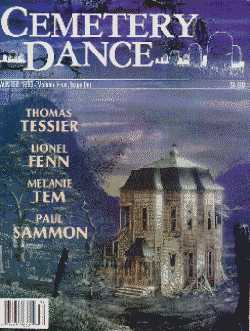 "I've found that most horror fiction and fantasy fiction is essentially
sexless, and if not sexless, then the vision of sex is adolescent. My
sense is that with the admission of sex, with the embracing of sexual
feeling into the narrative, and every shade and every conceivable
variation of sexual feeling, come the sense that fantasy can at some
point come of age. The argument which is often made against fantasy -
and which I think carries some weight - is that it is often an escape
from reality. You escape from the complexity of sexual exchange into a
world where Hobbits procreate but without ever getting to bed, and
where women, by and large, are painted in such etherial terms that the
possibility of having something under their 'nebulous but flowing
garments' is unconsidered. There seems to be a terror of sexuality.
When you use the word fantasy, to me there are fantasies of power -
very clearly - fantasies of transformation, and fantasies of sex. What
is our fantasy life therefore, if not, in some part, to feel our
erotic longings?"
"I've found that most horror fiction and fantasy fiction is essentially
sexless, and if not sexless, then the vision of sex is adolescent. My
sense is that with the admission of sex, with the embracing of sexual
feeling into the narrative, and every shade and every conceivable
variation of sexual feeling, come the sense that fantasy can at some
point come of age. The argument which is often made against fantasy -
and which I think carries some weight - is that it is often an escape
from reality. You escape from the complexity of sexual exchange into a
world where Hobbits procreate but without ever getting to bed, and
where women, by and large, are painted in such etherial terms that the
possibility of having something under their 'nebulous but flowing
garments' is unconsidered. There seems to be a terror of sexuality.
When you use the word fantasy, to me there are fantasies of power -
very clearly - fantasies of transformation, and fantasies of sex. What
is our fantasy life therefore, if not, in some part, to feel our
erotic longings?"
Just A Couple'a Comic Guys, Sittin' Around Talkin'
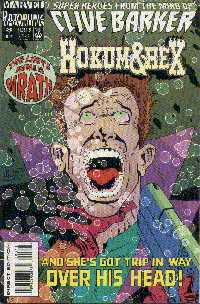
By Frank Lovece and Marc McLaurin, Hokum & Hex, Vol 1 No 3, November 1993
"My commitment is to be there for the Razorline imprint creatively,
commercially, watching over the decisions, but only being there to
interfere if things seem to be going awry. The thing I've learned from
being an executive producer is there are two kinds: the kind who really
wishes he could direct and get his finger in the pie at every moment
 and tells people how to do their jobs, and another kind - and I hope I
fall into this category - who says, 'Hey, it's going great. I'm going
to make a few remarks, but otherwise you should just get on with it, and
if it starts to go wrong, I'm there to help you solve the problem.'
and tells people how to do their jobs, and another kind - and I hope I
fall into this category - who says, 'Hey, it's going great. I'm going
to make a few remarks, but otherwise you should just get on with it, and
if it starts to go wrong, I'm there to help you solve the problem.'
"I know how sacred creativity is. And I know one of the first rules is
to respect the creator, and even if you disagree to find out why you
disagree - coax people's creativity to full flower and not stomp all
over it... At some point we're gonna disagree about something and
we're gonna talk it through. If it's all people coming from a place of
wishing the best for a project, then finally there should be no sour
words. It should be a question of doing this in a gentlemanly fashion.
There's enough British blood in me to believe that anything can be
sorted out with articulation and care for the other person's feelings.
I am firmly of the belief that if something can't be done without tears
and anger and tearing out of hair, then it probably is not worth doing.
The best books, movies, comics can be made certainly with pain - 'Oh, I
wish I could make this better, how do I do that?' - but it doesn't have
to be a pistol at dawn."
Clive Barker's Brush With Horror
By Michael Musto, New York Daily News, 19 November 1993
[Re: Blue Vision] "It's a dream image, and I think of it as strangely optimistic - not oppressive or scary but strange. Part of
the pleasure is, 'Here it is. Make of this what you will...'
"[The critics] do the kindest thing of the lot - they ignore me. I'm probably thought of as a dilettante, just dabbling at
painting, whereas I treat it very seriously and have a substantial body of work now."
Artist Visual Network At The Bess Cutler Gallery
By Chris Cusumano, Artist Visual Network, MCTV Channel 16, New York, 30 November 1993
[Re: The Arsonist] "Some paintings - and this is one of them - grow organically, you know, you start one way and it turns into something else. This guy came out of a figure I was doing who had a mask on his head and I didn't like the mask - I changed the mask and eventually the mask became flames. And then I began to feel this thing [flames around him] going on and I put the brand in his hand. So in a way, the painting was painted the other way around - it didn't start with this flame and engulf him - it started with the flames up here which moved down. I mean, beyond that, I don't know, your subconscious is telling you to do it, you know, you're driven by the desire to express something inside you."
Hellraiser
By Jay Stevenson, Imagi-Movies, Vol 1, No 2, Winter 1993/94
"The interesting thing about a number of the monsters of the '80's is
how inarticulate they were. Candyman and Pinhead came along, and boy
are they loquacious. I think audiences like that. At the end of the
day you're still throwing Christians to the lions - that's the
professional responsibility of the entertainment we're supplying - so
it doesn't do to get too pretentious.
"The real division in the arts is not into horror-fiction,
fantasy-fiction and science-fiction, but into imaginative fiction and
non-imaginative fiction. One of the things I will never do is write
about adultery on campus or male menopause. I will always write about
fantastical stuff. Bernard Rose said, 'If my life depended on it, I
couldn't make Ordinary People II,' and I couldn't either. My brain
doesn't work that way. The weird shit keeps coming in all the time. I
used to think everybody was playing around in the same areas. Now I
think there are some people who have strange chemical stuff going on
in their heads which is like a low-grade delirium. Fortunately,
because I make these movies, I'm not a danger to society!"

What Gives You Goosebumps?
By Steven Garbarino, Interview, December 1993
"Piero della Francesca, the fifteenth century Italian painter, and the petit mort."
Black & White
By Robert Ellsworth, Detour, December 1993
"I don't believe in dichotomies. Look at pain and pleasure. The closer you look, the more difficult it is to discern the differences. The closer you look at evil, the more believable and likely it looks. What I'm constantly trying to do is make people think for themselves, imagine for themselves. The dichotomies that you've been brought up with, the blacks and whites you've been brought up with, do not really work. They are not appropriate explanations of our world, internally or externally. They are convenient ways that politicians, religious leaders and chat-show hosts choose to reduce the complexities of the world. If you cling to them, you will end up simplifying yourself. In those simplifications lies a collective disaster. I find it terrifying."
Clive Barker Takes The Rorschach Test
By [ ], Expressions Of Dread, Third Annual Issue, Winter 1993/94
"Number three, this is a sad story; this is a woman who has been severed down the middle, as it were, through the middle of her face, and all the way down her body, by a very sharp cheese wire. Her two parts have been laid side by side; you can see her breasts there in the middle side by side, the arms laid splayed up. She was wearing high heel shoes as you can see, because her legs, which have been laid behind her, are visible with her high heel shoes on."
Click here for Interviews 1994...


