Interviews 1998 (Part One)
...Interviews galore as the Galilee tour trundled its way back and forth across the Atlantic. TV deals continued to be made and fall apart whilst Gods & Monsters opened to critical acclaim. In between signings and chat-shows Barker continued to work on the 200 paintings required for The Book of Hours (later renamed The Abarat) - so that's what those paint splats on his hands were...
The Making Of Psycho
Produced, written & directed, Laurent Bouzereau, (i) Psycho Collectors Edition DVD, (ii) Psycho disc of the Collected Hitchcock Works DVD Universal Studios, 1998
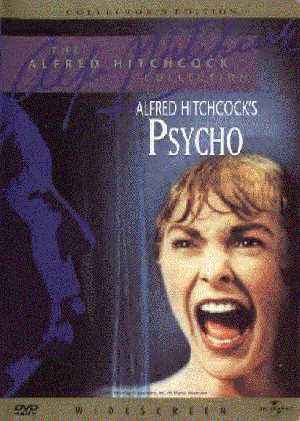
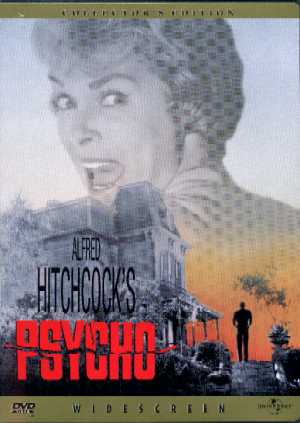 "It's a much more violent book than it is a movie. The girl gets
beheaded in the shower as opposed to simply stabbed to death. But the
book is mild by comparison with the facts of Ed Gein. This is one of
those series of murders that so shocked the nation that it became part
of American mythology. And we weren't around in 1916, so it's hard to
know how the facts impacted the fiction. But one's got to assume that
one of the reasons why both the book and the movie are so successful
is because people knew that, albeit remotely, they were based on truth.
"It's a much more violent book than it is a movie. The girl gets
beheaded in the shower as opposed to simply stabbed to death. But the
book is mild by comparison with the facts of Ed Gein. This is one of
those series of murders that so shocked the nation that it became part
of American mythology. And we weren't around in 1916, so it's hard to
know how the facts impacted the fiction. But one's got to assume that
one of the reasons why both the book and the movie are so successful
is because people knew that, albeit remotely, they were based on truth.
"[Ed Gein] was, obviously, a crazy, sad man who became a piece of
American mythology. He is the underpinning of Bloch's book, but he
obviously is there, dare we say this, in spirit in The Texas Chainsaw
Massacre pictures and, arguably, in The Silence Of The Lambs. What I
think the movie does spectacularly well and perversely, is bring a
curious glamour to the character of Norman Bates. In the book he's
this podgy, rather nondescript, short, balding man. And, of course,
in the movie, it's one of the great performances of cinema and the
defining performance of Anthony Perkins' career; and one of those
performances everybody knows, even if you've never seen the movie.
Everybody knows Norman Bates!"
Explorer From The Far Reaches Of Experience
By Kim August, Pharr Out! 1998
"In the traditional version of the shaman, the magician, the one who walks between the worlds, one of the things that make it possible to walk between worlds is a wound. The perfected body, the perfected soul is in a higher place. In the unperfected wounded self, the wound is an ability which grants you the power to look outside the conventional, luxurious, hedonistic, the sensual things which preoccupy us in this world into some other place. I think it's one of the reasons why very often artists are wounded, are psychically wounded in one way or the other. I think actually the truth is everybody is psychically wounded, the issue is whether you own up to it or not. I think what I'm trying to do constantly is, when I have these kind of journeys into empowerment, is that there is always a price for that empowerment. It's the yin and yang; without paying the price, you can't have the empowerment, but the empowerment to some extent may even cause you to pay the price. You have to grasp something very painful, you have to open yourself up to very painful experiences. The pain of the world if you will. And I think that one of the things that artists do, that magicians do, religious figures do is open up the place in us which we seal off very quickly as children, because we realize if we open up too much, it hurts too much. The world is full of hurt. People die, people leave, the world changes radically, unpredictably; things that we love finish, things that we hate begin. The experience of the world from an early age is primarily, I think, an experience of loss and pain and despair. In order to heal those feelings, paradoxically, you have to put yourself up to them. My books are very often 'Look it's okay to be wounded, it's okay to be imperfect but be aware that the wound should not just be suffered, it should be used. It should be a way to become the richer, more loving more constructive more articulate human being.'"
Barker Is Back
By [ ], www.harpercollins.co.uk, 1998
"Smothering repression is one of the reasons I decided to leave the
UK. I like to be in a place where you can talk about what moves you.
My narratives are often about trying to make stories which trap the
reader into feeling things that he or she wouldn't normally find
acceptable to feel. I try to get readers to confess to certain feelings
so that when then step out of the narrative, maybe they've changed a
little bit. I think 'confession' is a good word to use. It's a good
Catholic word and there's nothin' wrong with that. Books should make
somebody look at how they feel, be honest with themselves. Hazlitt has
a wonderful line, he says, 'we are not hypocrites in our dreams.' But
when we wake up it's different.
"We live in a culture in which we are rigorously organised. We're
organised in what we consume, whether it's a hamburger or 'The Titanic'.
And regrettably we often take pride in the fact that we're all going
to see the fucking sinking ship movie at the same time. But actually
in our private places, in our heart of hearts, we're not joiners,
we're individuals. We need to be very proud of the inner self. My
grandmother was one hundred last week. She's one of the fucking
strangest women on the planet, and I think she's proudly a hundred and
proudly strange. And I think at the age of a hundred she's earned it.
It's healthy in a culture in which we could all become hamburgers that
we hold onto the little corners of ourselves which are strange and
off-beat."
Clive Barker Interview
By Mark Dery, Carpe Noctem, Issue 13, 1998
"You can't get up in the morning and decide to write something with a
political scheme in mind, the desire to do what seems best for your
subculture, because then you start to write a kind of partisan fiction
which doesn't tell its own truth. What I think a writer does, perhaps
more particularly a writer of the fantastique such as myself, is
actually access things which are extremely personal and make
metaphorical life of them, weaving something into them that's going to
arouse contradictory and paradoxical feelings in the reader. So I am
aware, powerfully aware, that the work I put on the page or the screen
contains images of sexuality which are by no means all positive, but
that's part of who I am and also who I am as a storyteller.
"The image of gay S&M practitioners in 'Pulp Fiction' is less attractive,
but that's what Quentin Tarantino chose to do with that story at that
point. A semiotician can read any number of things into not only that
but into any piece of fantastique fiction: volumes have been written
about the 'Alien' movies, where obvious sexual imagery is offered up in
a pretty repulsive form - the phallic monster and the devouring mother.
But at the end of the day if I have the choice between doing something
which seems 'politically correct' and something which seems true to
the story I'm telling, I'll choose the latter, since otherwise I've
got to shoot down in flames the very thing which takes me flying in
the first place: my imagination."
Clive Barker
By [Darren Floyd], Raw Nerve, Issue 4, 1998
"There were two things I tried to do, starting with The Great and Secret Show, which were different to what I had done before.
The first was the very, very heavy horror: the very visual stuff has been replaced by a more fantastical thing. For example,
what the Jaff gets up to is weird but doesn't involve much viscera. there's not a huge amount of blood-letting. Also, I wanted
there to be a kind of lightness to the touch of the thing.
"I did a first draft which was much more in the style of Weaveworld, but it felt wrong because the culture I was describing
was so completely in contrast to the style I was describing it in. It felt phoney, it felt fake. So I went back again and
changed sentence structures, turns of phrase and tried to approach the book, not with an American point of view, because
I could never have that, but with a vocabulary that was lightly less literary.
"I felt that what would happen would be that people would talk in LA slang and then the sentence that described them
that followed would be more ornate in the style of Weaveworld. It felt like there were two books going on. So my
whole approach was to keep it light. That meant there would be jokes. I still think some of it is kind of dark."
Barker's Bodies
By Sam Whitehead, Time Out New York, 12 - 19 February 1998
 "Theatre is the most effective medium for creating fantasy. The problem with film is that it's all an illusion. And so when Dorothy steps through the door into Oz, and we change from black and white to colour, we're still in two dimensions - the image is still flat. That's the single most miraculous transformation that I know in film - from black and white to colour. But to me, there's nothing like the magical potential of watching an actor right there in front of you do something incredibly simple, like put on a donkey's head or even just the ears. Cinema very often sweats to give you illusions. And I know, because I've sweated myself as a filmmaker to put pins into somebody's face and do terrible things to people and so on.
"I mean, if I could do a private performance of Hellraiser with a cast of 30 every night for all the people who rent it on video, would that be a more powerful way to show Hellraiser? Absolutely it would, But I can't do that, so I make a compromise with a medium that I do not find very enchanting."

Body Snatcher
By Thomas Caruso, InTheater, 20 February 1998
"I went to a rather straight-laced school. Every year they would do a piece of Shakespeare - rather badly. But we had a progressive headmaster who let some friends and me produce these comic-strip style, rather violent pieces that were much more popular than the school play. When I went to university for philosophy and English lit., I kept writing and producing plays; after I left, we formed a company and went to London. Out of that period came plays which I published only recently - The History of the Devil, Frankenstein in Love - very socially-driven, left-of-centre pieces...
"If someone were to say, 'We really want to do a new Clive Barker play in a stylish fashion' - not Broadway, but without having to cut corners - I would love the idea of intellectual spectacle. My tongue is slightly in my cheek, but you know the point - stuff which pleases the eye and the mind."
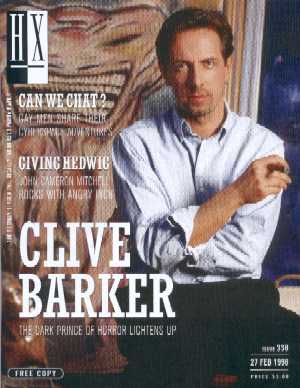
Fantastical Voyage
By Trenton Straub, HX Magazine, Issue 338, 27 February 1998
"The literary world doesn't care what I do in bed, whereas Hollywood does have something of a preoccupation with this. Hollywood is happy to see gay men in dresses - in comedies, camping it up - or as victims... We'll know the barriers are broken down when we get a gay Indiana Jones."
LA Times Festival of Books
Transcript of an interview by Martin Smith at the LA Times Festival of Books, 25 April 1998
"Most of my father's side of the family were sailors; my grandfather
was ship's cook and he would bring back, maybe from the East, trinkets,
stuff for us as kids. I didn't know him well, he died very young, but
he brought back Chinese puzzle boxes and he... I remember, I couldn't
work them, I couldn't do them, but you know it's one of
those things - it stays in your head. And when I was constructing that
story [The Hellbound Heart] and trying to think of a way to evoke
demons that wasn't just conventional 'chickens' blood and virgin on
the altar' kind of nonsense, I remembered that.
"One story of my grandfather which I think you'll find interesting:
when my grandmother passed away, she was 95 or 96, we found in her
letters two correspondences talking about the fact that her husband
Albert was drowned and dead. He was twice found - once when he was in
the merchant navy, once when he was in the Royal Navy. Sunk and lost.
The letters with a black line around them, coming from official sources,
one of them came from the Ministry of Defence during the war and one
came from his line, his shipping line, and I never realised that my
grandfather had been lost at sea twice, and on one occasion lost at
sea for four months. And my grandmother was a rather formal lady who went into mourning and all of this stuff; couldn't bear the man as it turned out, but she went into mourning and I said, I asked my Dad about this, I said, 'This is extraordinary to lose your husband twice, assume he was dead,' and he said, 'Yes - and the extraordinary thing was...' because he remembers this; he was a very young kid, '...he just turned up one day on the doorstep!' "
On Art, Censorship And Sexuality
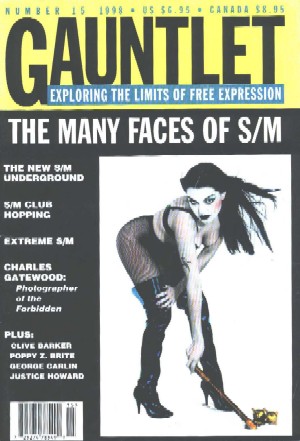
By Del Howison, Gauntlet, No. 15, Vol 1 (May) 1998
"I don't think [art]'s about value. I can't see how it cheapens things if I draw on a leather jacket or if you put an arm in front of me or a piece of paper in front of me.
And I don't think that anybody should be moved by the argument that art is any more valuable or better if it is on canvas instead of a person's leg. I mean you've
got painting hanging on the walls in museums and in people's homes and it is supposed to have a certain kind of reverence attached to it.
"I think that images we have on the wall we have almost too much reverence for. I think that reverence, in a way, makes the experience seem remote from us.
I love walking through a museum. And I love watching people make things. I'll give up the world to watch people paint. I'll watch some wretched fucking television
program with somebody painting a fir tree with wet sponges just because there is something about creation."
The Hellraising Horror Author Heads For The Comeback Trail With The Arty Gods And Monsters

By Michael Beeler, Cinefantastique, Vol 30 No 2, June 1998
"Almost every week, in this town, I hear someone say, 'Make it like...' and then fill in the gap. Now, very often, the 'like' is something I've done. You know, 'Make it like Hellraiser, make it like Candyman, make it like Lord of Illusions.' Well, what about making it like the next thing that is in my heart rather than the thing that was in my heart ten years ago? That is my frustration."
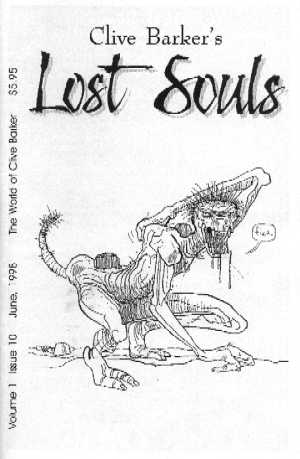
Confessions
By [Stephen Dressler and Cheryl Bentzen], Lost Souls, Issue 10, June 1998 (note : full text online at the Lost Souls site - see links)
"I...feel that this book [Galilee], absolutely, has a shape and
 completeness of itself. An astute reader will absolutely grasp where I
left places for the narrative to continue. This is not Part one of
something. It's a thing unto itself with, I hope, a completion at the
end and one large arc of storytelling told. It's a six hundred or
seven hundred page book! That's a hell of a lot of story! The other
thing that is interesting to me is that this is a first person book.
This is a complete departure for me. I've never written a novel, I
have short stories, in the first person. The invented first person of
this book, Maddox, is somebody I fell in love with. I enjoyed writing
in his voice. That is definitely something I would like to revisit
just from the pleasure of being in his company again."
completeness of itself. An astute reader will absolutely grasp where I
left places for the narrative to continue. This is not Part one of
something. It's a thing unto itself with, I hope, a completion at the
end and one large arc of storytelling told. It's a six hundred or
seven hundred page book! That's a hell of a lot of story! The other
thing that is interesting to me is that this is a first person book.
This is a complete departure for me. I've never written a novel, I
have short stories, in the first person. The invented first person of
this book, Maddox, is somebody I fell in love with. I enjoyed writing
in his voice. That is definitely something I would like to revisit
just from the pleasure of being in his company again."
Horror King Clive Barker Returns With 'Galilee'
By Bobbie Battista, Sunday Morning, CNN, 2 June 1998 (note : full text online at cnn.com)
"Well, it becomes like writing - like creating a family tree. You know, it's the reverse of going back over your history and discovering who your ancestors were. Here I'm sort of creating the ancestors for the characters. I had huge files on the characters and it fascinates me that part of creating stories. I enjoy hugely the richness that you can get into a novel. I really think it's one of the precious things about novels is that you can have this kind of narrative complexity. You can immerse yourself in a book like "Galilee" and stay there for days on end. And because the book has got a lot of tonal changes in it, it moves from the very dark to the light to the romantic. You mentioned erotic earlier on. There's the feel, I hope, that it's like a novel, it's like living another life. I know the novels that I used to love as a kid, and actually still love, are the kind of books that feel like another life for me. I enter them and it feels as though I'm breathing a different air, I'm living with people I know intimately."
AOL Appearance
Transcript of on-line appearance, 2 June 1998 (note : full text online through the Lost Souls site (in What's New) - see links)
"I have a room - a library - filled with books, manuscripts, props from films and presided over by a seven foot crucifix that came from a French church (legally!) and it's here that I come every day to write. It's a space that I built for myself, it overlooks my backyard. I don't think there's any more perfect place to write than in a library. What could be more inspiring then to have great books which have influenced you there on the shelves."
Voice Of The Narrator
By Benjamin Morrison,
The New Orleans Times-Picayune, 7 June, 1998
"I had a problem with the original draft of [Galilee]. My style as a writer tends to be not particularly self-conscious, [but] in the
second draft I added Maddox, and it suddenly came clear, it suddenly worked.
"Galilee's a little like Dracula, he's spoken about so much, by the time he arrives he is trailing legend. But in almost every regard,
he is wonderfully human. I think the reader will feel he's going to meet a mythic figure - one with a great, very easy power to seduce
us. But he's not like that."
"[Rachel] becomes the curiously empowered figure, when she opens herself to him. In the end, we're not so sure this is about a
hero but instead about a heroine, Rachel. The women fare better here than the men do. The book is a male voice describing the
story of another male. But in the end, it's the females who push their way through the envelope of patriarchy and dominate."
Throwing A Curve
By J.C.Patterson, Clarion Ledger, 14 June 1998
"I needed an anchor to which all the many stories in 'Galilee' could be connected, Maddox provided the single voice that allowed me to journey from Samarkand to a high-society gala in New York and from Sandusky, Ohio, to Hawaii or Paris."
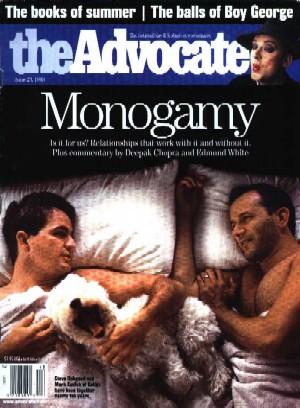
Dream Weaver
By Laurie K. Schenden, The Advocate, June 23, 1998 (note : full text online at www.advocate.com)
"I'm certainly pushing some buttons [with Galilee]. Marietta has a
little fling with a congressman's daughter and some very fun stuff.
I'm trying to have some fun, absolutely. A lot of imaginative fiction
is rather unimaginative when it comes to sex. But jeez, guys, this is
1998 - get with it...
"If I write from a truthful place within myself, that's the most
important thing I can do. Don't tell me that to straighten up these
characters is going to sell more books, because that's not how I
operate as a writer."
Chats From The Past
Transcript of on-line Hollywood Spotlight appearance, 23 June 1998
"We took [Hellraiser] door to door. And, because it was a $900,000 movie, which was really peanuts, it wasn't that hard to find someone to do it. I think the market place has changed... it's harder in these days of mega budgets and movies that are hiked through the ceiling to get those smaller projects up and running. I'm not sure it would be so easy if I were out there with Hellraiser now to get a movie which would be released theatrically. I think you could get straight to video. But, today to get a movie for $900,000 on the screens is regrettably passing. The X Files is still playing, Godzilla, and The Horse Whisperer are playing and these little guys... us little guys tend to get edged out in those circumstances. That said, there's still a huge appetite for good, imaginative filmmaking. And my deep hope is that eventually people will get sick of these CGI-driven, slick, empty entertainments that pass for movies. We've been hyped a whole bunch of pictures that have no content! And obviously a good example of that is Godzilla... a complete thoughtless movie... You could go see it and be emotionally unmoved by it. What was sad about that is a lot of people put a lot of money and time into making this experience that most of us would sit through and think, gee what was that all about? It's increasingly like that. How often do you come out of a movie and have nothing to say about it... besides, gosh that was loud. It's very important that people with vision and originality really get their voices heard. Because we're seeing in our cultural life hype and razzamatazz and slickness replacing genuine imagination... story. The kinds of things which draw us to entertainment in the first place. I hope there will be a rebellion. I hope one of these over-hyped pics will open one Friday and no one will show up and then the studios will learn a lesson. We can't be cheated over and over again. It's rude! We're being treated like imbeciles and we'll drink the fizzy drink and never complain about the fact that we weren't nourished. I think this will only happen when something goes disastrously wrong. It will require an incredibly expensive movie to go down in flames. They're basically only interested in money. How can they get more people to their theme parks, to buy the plastic doll... hey guys! What about storytelling? Drawing people in to a world that will make them feel enriched and changed a bit. Instead of pandering to the basest of instincts."

Hellraising Barker More Than A Master Of Horror
By Armando Carranza,
Update, Issue 861, 24 June 1998
"There is an obsessive part of my nature to describe my world in words... [For an artist] there is a Faustian pact which is played out. Towards the end, it is extreme, like a trance. Nothing is as important as the words. The work is so close to you. These are tender areas of the ego. With my fiction these are confessionals. Readers know that.
"I always want to do something different. 'Best-sellerdom' is not what I do. We live in such a dehumanized culture that everything is sold, sold, sold in a simple fashion. There is the weekly psycho thriller that comes out or the vampire 'bodice-ripper' once a year. I never want to be viewed as a product."
In Divine Territory
By Steve Fritz, Mania Magazine, 26 June 1998 (note : full text online at anotheruniverse.com)
"What Ballard does brilliantly is make you look at the world in a new way when you put the book down. That's very potent... I think Galilee and Sacrament are closer to that effect, if you will, than Imajica or Weaveworld, in which ordinary folks - or reasonably ordinary folks - are literally or figuratively dropped through some doorway into another world, where the rules are radically different. I don't have a lot of control over the way my imagination works. I could not say that I woke up one morning and decided to do this. It sort of decides on itself. Once I got on the path, particularly in the third draft of Galilee, I become more aware of how the material is shaping up. I don't think Ballard necessarily came to mind, but I did realize that this time I was going to play more subtly with what people perceived as reality."
Labor Of Love
By Julia Kamysz, Gambit, New Orleans, [July] 1998
"As a writer, I'm a very self-doubting fellow."
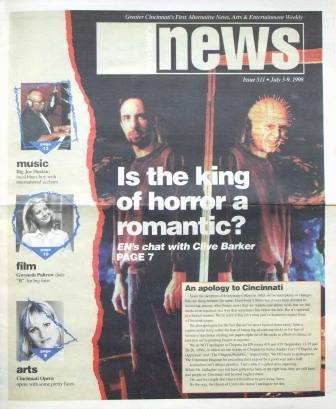
Everybody's News, Issue 511, 3 - 9 July 1998
Fear And Fantasy
By Candi Lace,
Everybody's News, Issue 511, 3 - 9 July 1998
"One minute I'm on top of the world and capable of doing anything, the next minute I'm feeling this profound doubt. This happens day after day, hour after hour. I don't know of any writer, producer or painter that doesn't go through this process. You just hope people like what you've done. So when Maddox tells you that he wants to describe everything about ghosts, poets, sailors, demons, cowboys and lovers, he really wants to encompass the world for you. This objective is what gets me up in the morning when I'm writing a book."
The Hitchcock House Of Horrors
By [ ],
The Guardian, 17 July 1998
[On Psycho] "I was taking pleasure in seeing the primal power these images had over somebody else. Watching those girls shriek and wail and cover their eyes, which is what you can do to people if you make a scary movie, is still burned into my mind 31 years later. I realised I wanted to do the same to other poor buggers."
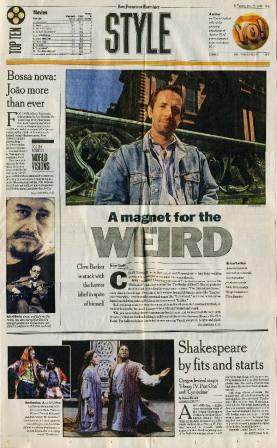
The San Francisco Examiner, 23 July 1998
A Magnet For The Weird
By Jane Ganahl,
The San Francisco Examiner, 23 July 1998
[On a visit to a US mortuary] "They use the corpses, most of whom are
indigents, for science and also, for plastic surgeons to practice on.
So they get something that they could never afford in their lifetimes -
they get a face lift! I mean, what kind of a sick and twisted world
delivers post-mortem beautification to the down-and-out? Isn't that
strange? Never give your body to science!
"This trip to the morgue - this is forbidden stuff, what goes on behind
closed doors. These are things we don't want to see, but I think are
important to see. Life is enhanced by a working knowledge of death. To
be quick, as opposed to dead, is fucking wonderful."
People Online
By Laura Kay Smith, [27] July 1998 (note : full text online at the Lost Souls site - see links)
"There are places in my mind and heart that I haven't yet shown to my readers, I haven't yet painted, I haven't yet evoked in movies. I'm trying to pour them out in honest ways. I'm trying to capture something sort of elusive."
Who Needs A Niche?
By Laura Dempsey, Dayton Daily News, [July] 1998
"I smoothed out the supernatural elements, mellowed out the horrors. In 'Galilee', I emphasised the humanity and reality. Interestingly in this book the strange elements, the fantastical elements, which are much subdued from earlier books, are more powerful because the context is more real."
Love, Barker Style
By Randy Myers, (New York)? Times, 30 July 1998
"I don't think I would have written 'Galilee' if I didn't have a lover who is black. And I don't think I would have dared to write about that interaction, that public interaction, with David not in my life."
People Online Appearance
Transcript of on-line appearance, 30 July 1998 (note : full text online at the Lost Souls site - see links)
"I want to be remembered as an imaginer, someone who used his imagination as a way to journey beyond the limits of self, beyond the limits of flesh and blood, beyond the limits of even perhaps life itself, in order to discover some sense of order in what appears to be a disordered universe. I'm using my imagination to find meaning, both for myself and, I hope, for my readers. It's easy to be cynical and pessimistic, to believe in something -- to believe in the importance of our own imaginative lives -- is sometimes hard, especially when, in our culture, we are surrounded by trashy, empty images which distract us from the search for significance in our lives. Our imaginations are our most powerful personal tool for revelation. In the face of the truth contained in our dreams and fantasy the regressive, stifling, divisive cruelties which are sold to us daily in the guise of fundamentalism and political expediency, wither. We have to dream."
It Ain't Easy Being...
By Sean Plummer,
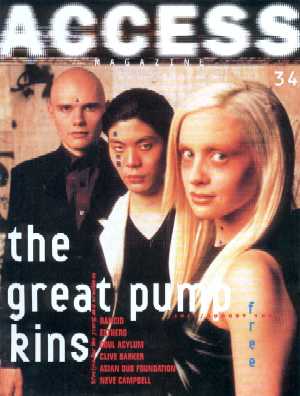 Access, No 34, July / August 1998
"I think one of the things I'm learning, as I develop as a writer, is sometimes one strange word in an otherwise completely straightforward sentence can be more potent than a sentence of Lovecraftian complexity. [Galilee] is not a book about interdimensional travel or things from hell coming to visit this world. In fact one of the sweetest and strangest scenes is the baptism of Galilee, where this tiny little baby is put into the Caspian Sea two thousand years ago and swims away! And I got that from David, who at the age of eleven months, before he could walk, decided to leave home and crawled away, crawled off down the street. Just decided he couldn't bear it anymore and left!"

Lord Of New Illusions
By W.C.Stroby, Fangoria, No 175, August 1998
"I've always done my own thing, and the people who are familiar with the kind of work I make know that a Clive Barker book, a Clive Barker painting or a Clive Barker movie is going to have a particular feel to it. And I always felt it was my job not to pander [to trends]. For better or worse, I do what I do in a kind of dogged fashion and follow my instincts through whatever the stories are that I feel I need to tell."
Click here for Interviews 1998 (Part Two)...


